
Holashtak 2026: Dates, Meaning, and Why Many People Keep Things Simple
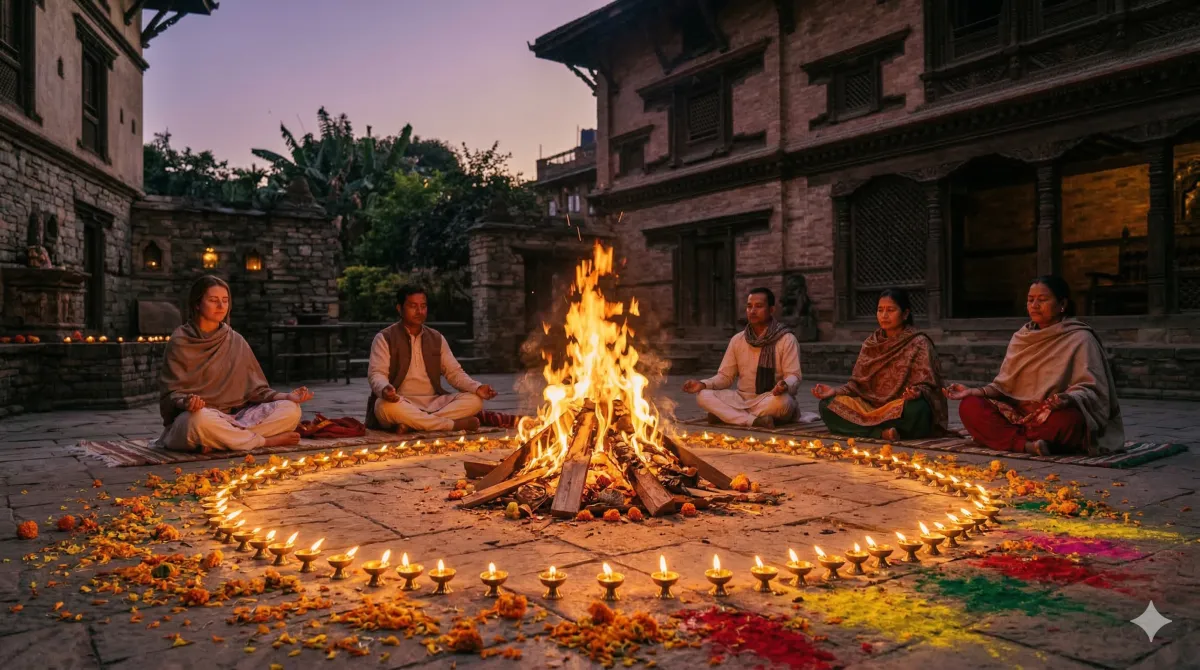
Every year, just as the excitement of Holi starts building, there's a quiet period that most families in South Asia know well. Grandparents remind you that the wedding date needs to be before or after "those eight days." Your mother mentions that it's not the right time to buy the new car. And somewhere, an uncle insists that even signing a rental agreement should wait.
This is Holashtak — the eight days before Holi when, according to Vedic tradition, the cosmos asks us to slow down. If you've ever wondered what it actually means, whether it's just superstition, or if there's genuine wisdom behind it, you're in the right place. Let's talk about it honestly.
What Is Holashtak?
The word Holashtak comes from combining two Sanskrit-rooted words: Holi (the festival of colors) and Ashtak (meaning eight). It refers to the eight days leading up to Holika Dahan — the night when bonfires are lit to celebrate the triumph of good over evil.
In the Hindu calendar, Holashtak begins on the Ashtami (eighth day) of Shukla Paksha (the bright fortnight) in the month of Phalguna and ends on Phalguna Purnima, the full moon night of Holika Dahan.
Think of Holashtak as the deep breath before the celebration — a time when the universe turns inward before bursting into the colors and joy of Holi.
During these eight days, all eight major celestial bodies in Vedic astrology — the Sun, Moon, Mars, Mercury, Jupiter, Venus, Saturn, and Rahu — are believed to become intensely active. It's not that their energy turns "bad." It's more like the volume gets turned up on everything. Emotions run hotter. Decisions feel heavier. The cosmic atmosphere becomes charged with transformative energy.
This is why the tradition suggests keeping things simple. Not because disaster will strike, but because the energy of this period favors inner work over outer expansion.
Holashtak 2026: The Exact Dates
In 2026, Holashtak falls during the following period:
- Start: Tuesday, February 24, 2026 (Phalguna Shukla Ashtami)
- End: Tuesday, March 3, 2026 (Holika Dahan / Phalguna Purnima)
- Rangwali Holi: Wednesday, March 4, 2026
That gives us eight days of Holashtak, followed by the joyful explosion of color on Holi. If you're planning any major events — a wedding, a housewarming, a business launch — it's worth noting these dates and scheduling around them if the tradition matters to your family.
The Mythology Behind Holashtak
Like most things in Vedic culture, Holashtak carries mythology that teaches something deeper.
The Story of Prahlad and Hiranyakashipu
The demon king Hiranyakashipu was consumed by ego. He demanded that everyone worship him as god. But his own son, Prahlad, was an unwavering devotee of Lord Vishnu and refused to bow to his father's arrogance. Enraged, Hiranyakashipu subjected Prahlad to horrific trials — poisoning, throwing him off cliffs, crushing him with elephants — all during these eight days.
The period of Holashtak represents Prahlad's suffering and steadfast faith. It ends with Holika Dahan, when Prahlad's evil aunt Holika — who sat in fire with him believing she was protected — was consumed by the flames instead. Prahlad emerged unharmed. Good triumphed.
The Story of Kamadeva and Shiva
In another telling, Kamadeva (the god of love and desire) tried to disturb Lord Shiva's deep meditation by shooting a flower arrow at him. Shiva, furious at the interruption, opened his third eye and reduced Kamadeva to ashes. This happened during the Holashtak period. The message? This is not the time to chase desires. It's the time to turn inward.
Both stories point to the same truth: Holashtak is a period of burning away ego, desire, and negativity — a cosmic preparation for the renewal that Holi brings.
What to Avoid During Holashtak
The traditional guidance is straightforward: avoid starting anything new that carries significant life weight. The reasoning isn't fear-based — it's about timing. Just as you wouldn't plant seeds during a storm, you don't begin major endeavors when the cosmic energies are churning.
Here's what's traditionally avoided:
- Marriages and engagements — No weddings, no ring ceremonies, no formal proposals
- Griha Pravesh — No housewarming or moving into a new home
- New business ventures — Avoid launching businesses, signing major contracts, or starting new partnerships
- Major purchases — Hold off on buying property, vehicles, or making large investments
- Mundan and Namkaran — Postpone head-shaving ceremonies and naming ceremonies for children
- Bhoomi Pujan — Don't break ground on new construction
- Starting new employment — If possible, delay joining a new job
- Auspicious journeys — Avoid travel meant for religious or auspicious purposes
An important note: Your regular daily life continues as normal. Going to work, cooking meals, meeting friends, handling everyday responsibilities — none of this is affected. Holashtak is about pausing new beginnings, not putting life on hold.
What You Should Do During Holashtak
Here's the part that often gets overlooked: Holashtak isn't just about what you can't do. It's about what you should do. The same intense planetary energy that makes this period unsuitable for material beginnings amplifies the power of spiritual work.
Spiritual Practices
- Mantra chanting — Vishnu mantras and Shiva mantras are especially powerful during this time. The Om Namo Narayanaya and Om Namah Shivaya are traditional choices
- Meditation — Even 15-20 minutes of daily meditation during Holashtak can feel noticeably deeper than usual
- Fasting — Many devotees observe partial or full fasts, particularly on Ashtami and Ekadashi
- Hanuman Chalisa — Reciting the Hanuman Chalisa, especially on Tuesdays, is believed to provide protection and strength
Acts of Charity
Charity (Daan) during Holashtak is considered especially meritorious. Traditional acts include:
- Donating food and grains to those in need
- Giving clothing, particularly to the elderly or underprivileged
- Contributing to community kitchens or temples
- Offering sesame seeds, jaggery, or blankets
Self-Reflection
Beyond formal spiritual practice, Holashtak is a natural time for honest self-reflection. What patterns are you carrying that no longer serve you? What ego-driven decisions have you been avoiding? What needs to be "burned" in your own inner Holika Dahan before you can step into renewal?
If you're curious about what this period means specifically for your birth chart — which planets are most affected and what areas of life to focus on — our astrologers can help with a personalized reading. Your first consultation is free.
Is Holashtak Really "Inauspicious"? A Balanced View
Let's be honest about something. The word "inauspicious" gets thrown around a lot during Holashtak, and it creates unnecessary fear. Many modern Vedic scholars are pushing back on this framing.
The more nuanced view is this: Holashtak is a period of intense cosmic energy that favors transformation over transaction. It's not that bad things will happen if you sign a lease on February 26th. It's that the energetic environment is better suited for inner work than outer expansion.
Think about it this way. The week before a major storm, a sailor doesn't set sail — not because the ocean hates them, but because the timing isn't right for that particular endeavor. They use the time to repair nets, check supplies, and prepare. That's Holashtak.
Holashtak is not about bad luck. It's about the universe inviting you to pause, reflect, and prepare for renewal. The "inauspicious" label is a simplified way of saying: this energy serves a different purpose than what you're planning.
If your family observes Holashtak, honor the tradition. If you're more skeptical, at least appreciate the wisdom of building a pause into the calendar — a reminder that not every moment needs to be about doing, starting, and acquiring. Sometimes the most powerful thing you can do is sit still.
Holashtak and Your Birth Chart
Here's something most generic Holashtak articles won't tell you: the impact of this period varies depending on your individual birth chart.
If you're running a Mars or Rahu Dasha, you might feel Holashtak more intensely than someone in a Jupiter or Venus period. If your Moon sign is particularly sensitive — say, Cancer or Pisces — the emotional undercurrents of this period could hit harder.
An authentic Vedic astrologer can look at your chart and tell you:
- Which planets in your chart are most activated during Holashtak
- Whether any specific precautions are personally relevant to you
- Which mantras or remedies align best with your planetary periods
- How to channel this energy productively based on your unique Kundali
This is exactly the kind of personalized insight that separates genuine Vedic guidance from one-size-fits-all horoscope advice. If you'd like to understand how Holashtak 2026 specifically affects you, try a free consultation with one of our astrologers from the Himalayas.
Quick Reference: Holashtak 2026 at a Glance
- Period: February 24 – March 3, 2026
- Duration: 8 days
- Ends with: Holika Dahan (March 3, evening)
- Holi: March 4, 2026
- Avoid: Weddings, housewarming, new business, major purchases, Mundan
- Embrace: Meditation, mantra chanting, fasting, charity, self-reflection
- Daily life: Continues as normal — this only affects new auspicious beginnings
The Bigger Picture
Holashtak is one of those beautiful traditions that, when understood properly, reveals something profound about the Vedic worldview. Life isn't a straight line of constant expansion. There are seasons for action and seasons for stillness. Seasons for building and seasons for letting go.
The eight days before Holi are a season for letting go. Let the fire of Holika Dahan burn away what no longer serves you — the grudges, the anxieties, the ego-driven plans. Then step into Holi with lightness, color, and genuine joy.
That's not superstition. That's wisdom.
Want to know how to navigate Holashtak based on your personal Kundali? See how our readings work, or go ahead and book your free first consultation. Our astrologers from Nepal's Himalayan tradition will give you personalized, no-nonsense guidance.
Curious About Your Stars?
Get your first consultation free with an authentic Vedic astrologer from the Himalayas. Share your birth details and receive personalized insights.
Try Your Free ReadingWritten By
Astro By Veda