The 27 Nakshatras: Your Lunar Mansion and What It Means
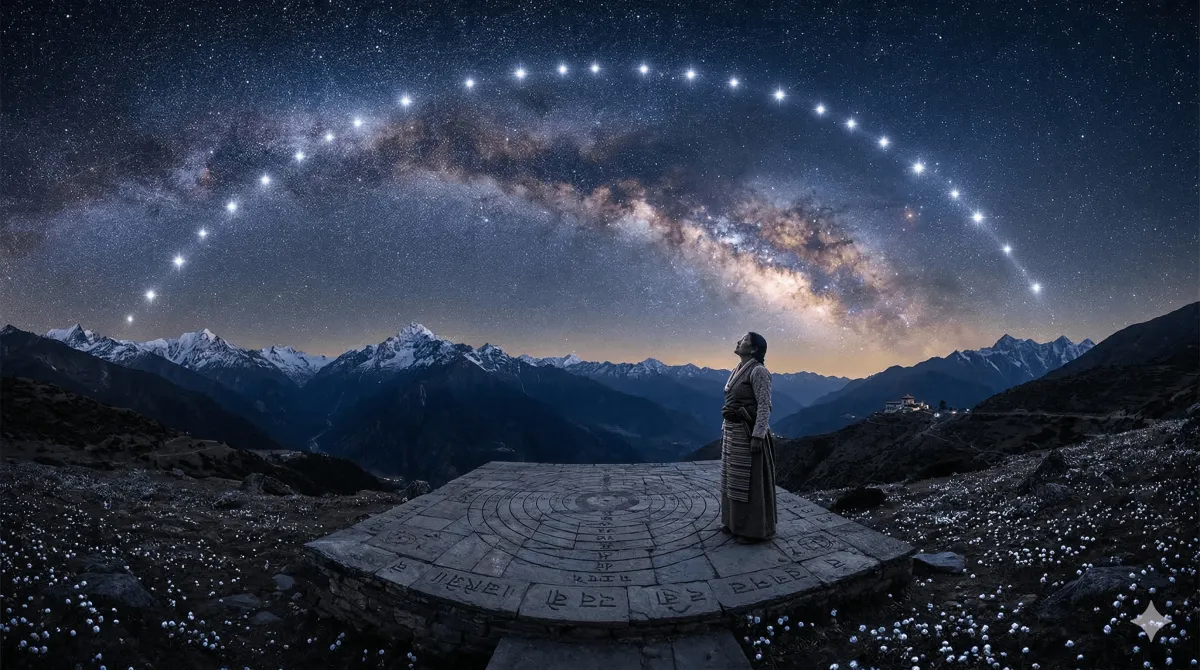
You probably know your zodiac sign. You might even know your Vedic Moon sign. But in the tradition of Jyotish — the ancient astrology of India and Nepal — there's a layer of cosmic identity that goes even deeper than your sign. It's called your Nakshatra, your lunar mansion, and it might just be the most revealing piece of your entire birth chart.
Think of it this way: if your zodiac sign (Rashi) is the neighborhood you live in, your Nakshatra is the specific house on the street. Two people can share the same Moon sign and still feel completely different from each other — and their Nakshatras are usually the reason why.
There are 27 Nakshatras in total, each spanning exactly 13 degrees and 20 minutes of the zodiac. Together, they stitch a complete circle of 360 degrees around the sky. Each one has its own ruling deity, planetary lord, animal symbol, and temperament. And your birth Nakshatra — the one the Moon was passing through at the exact moment you took your first breath — shapes your personality, emotional patterns, relationships, and even the timing of your life's biggest chapters.
Let's walk through all 27 of them.
Nakshatras vs. Rashis: What's the Difference?
Before we dive in, it helps to understand how Nakshatras relate to the 12 zodiac signs you're already familiar with.
Each Rashi (zodiac sign) covers 30 degrees of the sky. Each Nakshatra covers 13 degrees and 20 minutes. That means every Rashi contains roughly 2.25 Nakshatras. So within the broad strokes of, say, Cancer, you'll find parts of three different Nakshatras — Punarvasu, Pushya, and Ashlesha — each with a very distinct flavor.
This is why Nakshatras matter so much. Your Rashi tells you the general theme. Your Nakshatra tells you how you specifically live that theme. It's the difference between knowing someone is a musician and knowing they play the cello with a jazz ensemble on weekends. Same world, much sharper detail.
The Three Temperaments: Deva, Manushya, and Rakshasa
One of the most fascinating ways to understand the Nakshatras is through their temperament classification. Each Nakshatra falls into one of three categories: Deva (divine), Manushya (human), or Rakshasa (fierce/demon-like). Don't let the names alarm you — none of them are good or bad. They describe energetic tendencies, not moral character.
Deva (Divine) Nakshatras — The Gentle Lights
People born under Deva Nakshatras tend to be gentle, principled, and drawn to harmony. They often carry an innate sense of idealism and prefer to approach life through kindness, faith, and cooperation. Here are the nine Deva Nakshatras:
- Ashwini (0-13:20 Aries) — Ruled by Ketu. The healers and initiators. Quick, energetic, and always first on the scene. They have a natural gift for medicine and restoration. Symbol: a horse's head.
- Mrigashira (23:20 Taurus - 6:40 Gemini) — Ruled by Mars. The seekers and wanderers. Curious, gentle, and always searching for something — knowledge, beauty, truth. Symbol: a deer's head.
- Punarvasu (20:00 Gemini - 3:20 Cancer) — Ruled by Jupiter. The returners. No matter how far they stray or how hard they fall, they always find their way home. Optimistic, philosophical, resilient. Symbol: a quiver of arrows.
- Pushya (3:20-16:40 Cancer) — Ruled by Saturn. Considered the most auspicious Nakshatra for almost any undertaking. Nurturing, generous, deeply devoted to family and community. Symbol: a flower or udder.
- Swati (6:40-20:00 Libra) — Ruled by Rahu. Independent, flexible, and self-made. Like a young plant bending in the wind but never breaking. Adaptable and surprisingly strong. Symbol: a young shoot swaying in the breeze.
- Anuradha (3:20-16:40 Scorpio) — Ruled by Saturn. Devoted friends and lovers. They thrive in organizations and communities, building bonds that last lifetimes. Symbol: a lotus flower.
- Shravana (10:00-23:20 Capricorn) — Ruled by the Moon. The listeners. They learn through hearing and have an uncanny ability to connect with people through words and stories. Symbol: an ear or three footprints.
- Revati (16:40-30:00 Pisces) — Ruled by Mercury. The nurturers of the zodiac's final stretch. Compassionate, dreamy, artistic, and deeply protective of those who are vulnerable. Symbol: a fish or a drum.
- Hasta (10:00-23:20 Virgo) — Ruled by the Moon. Skilled with their hands and clever in execution. Craftsmanship, healing touch, wit, and resourcefulness define them. Symbol: an open hand.
Manushya (Human) Nakshatras — The Balanced Souls
Manushya Nakshatras carry a blend of light and shadow — ambition and compassion, desire and wisdom. These are the most "human" energies in the zodiac, grounded and relatable. Nine Nakshatras fall here:
- Bharani (13:20-26:40 Aries) — Ruled by Venus. The bearers and transformers. Intense, creative, and unafraid of life's extremes — birth, death, and everything in between. Symbol: the yoni (womb).
- Rohini (10:00-23:20 Taurus) — Ruled by the Moon. The most fertile and creative Nakshatra. Magnetic, sensual, artistic, and deeply connected to beauty and growth. Symbol: an ox cart.
- Ardra (6:40-20:00 Gemini) — Ruled by Rahu. The storm bringers. Intellectual, intense, and drawn to tearing things down so they can be rebuilt better. Transformation through effort. Symbol: a teardrop.
- Purva Phalguni (13:20-26:40 Leo) — Ruled by Venus. The celebrators. Warm, generous, pleasure-loving, and born to enjoy life and share that joy with others. Symbol: a hammock or front legs of a bed.
- Uttara Phalguni (26:40 Leo - 10:00 Virgo) — Ruled by the Sun. The patrons. Responsible, kind, and naturally drawn to service, leadership, and building lasting structures. Symbol: a bed's back legs.
- Purva Ashadha (13:20-26:40 Sagittarius) — Ruled by Venus. The invincible ones. Confident, persuasive, and carrying an inner conviction that cannot be shaken. Symbol: a fan or winnowing basket.
- Uttara Ashadha (26:40 Sagittarius - 10:00 Capricorn) — Ruled by the Sun. The universal leaders. Patient, righteous, and destined for enduring victories that come through persistence, not shortcuts. Symbol: an elephant's tusk.
- Purva Bhadrapada (20:00 Aquarius - 3:20 Pisces) — Ruled by Jupiter. The mystic warriors. Intense spiritual seekers who carry fire in their hearts and aren't afraid to walk alone on unconventional paths. Symbol: a sword or front legs of a funeral cot.
- Uttara Bhadrapada (3:20-16:40 Pisces) — Ruled by Saturn. The wise elders. Deep, controlled, and spiritually mature. They possess a quiet power and often serve as anchors for those around them. Symbol: back legs of a funeral cot or a serpent.
Rakshasa (Fierce) Nakshatras — The Untamed Forces
Rakshasa doesn't mean evil — not even close. These Nakshatras carry raw, powerful, protective energy. People born under them tend to be fiercely independent, intensely determined, and uncompromising in their convictions. They're the ones who get things done when no one else will. Nine Nakshatras hold this fire:
- Krittika (26:40 Aries - 10:00 Taurus) — Ruled by the Sun. The cutters. Sharp, purifying, and capable of burning away what no longer serves. Fierce protectors and truth-tellers. Symbol: a razor or flame.
- Ashlesha (16:40-30:00 Cancer) — Ruled by Mercury. The serpent energy. Deeply perceptive, hypnotic, and strategically brilliant. They see what others miss and move with quiet precision. Symbol: a coiled serpent.
- Magha (0-13:20 Leo) — Ruled by Ketu. The royal ancestors. Regal, proud, and deeply connected to lineage and tradition. They carry the weight of their family's legacy with dignity. Symbol: a throne or palanquin.
- Chitra (23:20 Virgo - 6:40 Libra) — Ruled by Mars. The architects of beauty. Creative visionaries who build things that are both functional and stunning. Charismatic and detail-oriented. Symbol: a bright jewel or pearl.
- Vishakha (20:00 Libra - 3:20 Scorpio) — Ruled by Jupiter. The single-minded achievers. Once they set a goal, nothing distracts them. Ambitious, focused, and willing to endure anything to reach their destination. Symbol: a triumphal arch or potter's wheel.
- Jyeshtha (16:40-30:00 Scorpio) — Ruled by Mercury. The chief protectors. Born leaders who rise to authority through sheer force of will. Protective, courageous, and sometimes intimidating. Symbol: a circular amulet or earring.
- Mula (0-13:20 Sagittarius) — Ruled by Ketu. The root destroyers. They have a need to get to the bottom of everything — philosophically, spiritually, literally. Transformation through uprooting. Symbol: a tied bunch of roots.
- Dhanishta (23:20 Capricorn - 6:40 Aquarius) — Ruled by Mars. The musicians and wealth builders. Ambitious, rhythmic, and skilled at attracting abundance. They often have a natural ear for music. Symbol: a drum.
- Shatabhisha (6:40-20:00 Aquarius) — Ruled by Rahu. The hundred healers. Secretive, independent, and deeply connected to alternative healing and hidden knowledge. They guard their inner world carefully. Symbol: an empty circle or a hundred flowers.
How to Find Your Birth Nakshatra
Your birth Nakshatra (also called Janma Nakshatra) is determined by one thing: where the Moon was at the exact time you were born. Not the Sun — the Moon. This is because in Vedic astrology, the Moon represents your mind, emotions, and inner life, and the Nakshatra system is fundamentally a lunar framework.
To calculate yours, you need three pieces of information: your date of birth, your exact time of birth (as precise as possible), and your place of birth. The Moon moves about 13 degrees per day, which means it passes through one entire Nakshatra roughly every day. If your birth time is off by a few hours, you might get assigned the wrong one — so precision matters here.
A Vedic astrologer can identify your Nakshatra instantly from your birth chart. If you'd like to discover yours, our astrologers at AstroByVeda can walk you through it during a free consultation and explain what it reveals about your nature.
Nakshatra Compatibility in Relationships
If you've ever heard of Kundali matching for marriage, Nakshatras are at the heart of it. The traditional compatibility system — called Ashtakoota Milan — compares the birth Nakshatras of two people across eight categories and assigns a score out of 36 points.
The eight categories (Kootas) examine different dimensions of compatibility:
- Varna — spiritual and ego compatibility
- Vasya — mutual influence and attraction
- Tara — health and well-being together
- Yoni — physical and intimate compatibility
- Graha Maitri — mental and intellectual harmony
- Gana — temperament match (Deva-Manushya-Rakshasa)
- Bhakoota — emotional connection and family welfare
- Nadi — genetic and health compatibility (carries the most weight)
A score of 18 or above is generally considered favorable for marriage. But experienced astrologers never rely on the score alone — they also examine the full charts of both partners, including planetary positions, Dasha periods, and specific combinations (yogas) that affect relationship dynamics.
The Gana (temperament) match is particularly interesting. A Deva-Deva match tends to be harmonious and gentle. A Rakshasa-Rakshasa pairing can be intensely passionate and deeply loyal. A Deva-Rakshasa combination, though it scores lower on paper, can actually work beautifully when both partners understand and respect each other's fundamental nature.
Nakshatras in Daily Life: The Art of Muhurta
Beyond personality and compatibility, Nakshatras play a vital role in Muhurta — the Vedic system of choosing auspicious times for important activities. In Nepal and across South Asia, almost no significant event happens without consulting the Nakshatra of the day.
Getting married? The astrologer checks which Nakshatra the Moon occupies during the ceremony. Starting a business? There are specific Nakshatras considered ideal for new ventures. Moving into a new home, beginning a journey, even planting crops — each activity has Nakshatras that support it and others that are best avoided.
Some general guidelines from the tradition:
- Rohini, Uttara Phalguni, Uttara Ashadha, Uttara Bhadrapada — Fixed (Dhruva) Nakshatras. Excellent for laying foundations, starting long-term projects, and moving into a home.
- Ashwini, Pushya, Hasta — Great for travel, medical treatments, and quick initiatives.
- Chitra, Anuradha, Revati, Mrigashira — Favorable for creative work, socializing, and making new garments or jewelry.
- Ardra, Ashlesha, Jyeshtha, Mula — Sharp (Tikshna) Nakshatras. Suitable for activities requiring confrontation, breaking old patterns, or surgical procedures — but generally avoided for celebrations.
This is a simplified overview. A skilled Vedic astrologer considers many additional factors — the weekday, the Tithi (lunar day), the Yoga, the Karana, and the individual's own chart — to select the most harmonious moment. But the Moon's Nakshatra is always a primary consideration.
Your Nakshatra Is a Doorway
What makes the Nakshatra system so special is how specific it gets. Western astrology gives you 12 Sun signs. Vedic astrology gives you 12 Moon signs. But the Nakshatras? They give you 27 distinct cosmic identities, each with its own mythology, energy, and purpose.
Your birth Nakshatra doesn't just describe who you are — it connects you to a lineage of meaning that stretches back thousands of years. The sages who mapped these lunar mansions weren't just stargazing. They were listening to the sky, tracking patterns in human behavior that repeated generation after generation under the same stars.
When you know your Nakshatra, you start to notice things. Why you're drawn to certain people. Why particular seasons feel more alive to you. Why some decisions come easily and others feel like swimming against the current. It's not magic. It's pattern recognition at a cosmic scale — the kind that our Himalayan astrologers have been practicing and refining for generations.
If you're curious to learn which Nakshatra the Moon chose for your arrival, and what its ancient wisdom has to say about your path, we're here to help you find out.
Curious About Your Stars?
Get your first consultation free with an authentic Vedic astrologer from the Himalayas. Share your birth details and receive personalized insights.
Try Your Free ReadingWritten By
Astro By Veda